2016. április 25., hétfő

The Internet

Research into packet switching started in the early 1960s, and packet switched networks such as the NPL network,ARPANET, CYCLADES Merit Network, Tymnet, and Telenet, were developed in the late 1960s and 1970s using a variety ofprotocols. The ARPANET project led to the development of protocols for internetworking, by which multiple separate networks could be joined into a single network of networks.
ARPANET development began with two network nodes which were interconnected between the Network Measurement Center at the University of California, Los Angeles (UCLA) Henry Samueli School of Engineering and Applied Science directed by Leonard Kleinrock, and the NLS system at SRI International (SRI) by Douglas Engelbart in Menlo Park, California, on 29 October 1969.The third site was the Culler-Fried Interactive Mathematics Center at the University of California, Santa Barbara, followed by theUniversity of Utah Graphics Department. In an early sign of future growth, fifteen sites were connected to the young ARPANET by the end of 1971. These early years were documented in the 1972 film Computer Networks: The Heralds of Resource Sharing.
Early international collaborations on the ARPANET were rare. European developers were concerned with developing the X.25 networks. Notable exceptions were the Norwegian Seismic Array (NORSAR) in June 1973, followed in 1973 by Sweden with satellite links to the Tanum Earth Station and Peter T. Kirstein's research group in the United Kingdom, initially at the Institute of Computer Science, University of London and later at University College London.
In December 1974, RFC 675 (Specification of Internet Transmission Control Program), by Vinton Cerf, Yogen Dalal, and Carl Sunshine, used the term internet as a shorthand for internetworking and later RFCs repeated this use. Access to the ARPANET was expanded in 1981 when the National Science Foundation (NSF) funded the Computer Science Network (CSNET). In 1982, the Internet Protocol Suite (TCP/IP) was standardized, which permitted worldwide proliferation of interconnected networks.
T3 NSFNET Backbone, c. 1992.
TCP/IP network access expanded again in 1986 when the National Science Foundation Network (NSFNet) provided access to supercomputer sites in the United States for researchers, first at speeds of 56 kbit/s and later at 1.5 Mbit/s and 45 Mbit/s. Commercial Internet service providers (ISPs) emerged in the late 1980s and early 1990s. The ARPANET was decommissioned in 1990. By 1995, the Internet was fully commercialized in the U.S. when the NSFNet was decommissioned, removing the last restrictions on use of the Internet to carry commercial traffic.The Internet rapidly expanded in Europe and Australia in the mid to late 1980s and to Asia in the late 1980s and early 1990s.
The beginning of dedicated transatlantic communication between the NSFNET and networks in Europe was established with a low-speed satellite relay between Princeton University and Stockholm, Sweden in December 1988. Although other network protocols such as UUCP had global reach well before this time, this marked the beginning of the Internet as an intercontinental network.
Slightly over a year later in March 1990, the first high-speed T1 (1.5 Mbit/s) link between the NSFNET and Europe was installed between Cornell University and CERN, allowing much more robust communications than were capable with satellites. Six months later Tim Berners-Lee would begin writing WorldWideWeb, the first web browser after two years of lobbying CERN management. By Christmas 1990, Berners-Lee had built all the tools necessary for a working Web: the HyperText Transfer Protocol (HTTP) 0.9, the HyperText Markup Language (HTML), the first Web browser (which was also a HTML editor and could accessUsenet newsgroups and FTP files), the first HTTP server software (later known as CERN httpd), the first web server (http://info.cern.ch), and the first Web pages that described the project itself.
Since 1995 the Internet has tremendously impacted culture and commerce, including the rise of near instant communication by email, instant messaging, telephony (Voice over Internet Protocol or VoIP), two-way interactive video calls, and the World Wide Web with its discussion forums, blogs, social networking, and online shopping sites. Increasing amounts of data are transmitted at higher and higher speeds over fiber optic networks operating at 1-Gbit/s, 10-Gbit/s, or more.
2005
2010
2014a
World population[39]
6.5 billion
6.9 billion
7.2 billion
Not using the Internet
84%
70%
60%
Using the Internet
16%
30%
40%
Users in the developing world
8%
21%
32%
Users in the developed world
51%
67%
78%
a Estimate.
The Internet continues to grow, driven by ever greater amounts of online information and knowledge, commerce, entertainment and social networking. During the late 1990s, it was estimated that traffic on the public Internet grew by 100 percent per year, while the mean annual growth in the number of Internet users was thought to be between 20% and 50%. This growth is often attributed to the lack of central administration, which allows organic growth of the network, as well as the non-proprietary nature of the Internet protocols, which encourages vendor interoperability and prevents any one company from exerting too much control over the network. As of 31 March 2011, the estimated total number of Internet users was 2.095 billion (30.2% of world population). It is estimated that in 1993 the Internet carried only 1% of the information flowing through two-way telecommunication, by 2000 this figure had grown to 51%, and by 2007 more than 97% of all telecommunicated information was carried over the Internet.
References:
How the web went world wide, Mark Ward, Technology Correspondent, BBC News. Retrieved 24 January 2011
"Total Midyear Population for the World: 1950-2050", International Programs Center for Demographic and Economic Studies, U.S. Census Bureau. Retrieved 24 May 2014.
Telecommunication Development Bureau, International Telecommunication Union (ITU). Retrieved 24 May 2015.
"Brief history of internet". Internet Society. Retrieved9 April 2016It happened that the work at MIT (1961-1967), at RAND (1962-1965), and at NPL (1964-1967) had all proceeded in parallel without any of the researchers knowing about the other work. The word "packet" was adopted from the work at NPL


The history of Penicillin

             In 1897 a French physician, Ernest Duchesne at École du Service de Santé Militaire in Lyon, published a medical thesis entitled Contribution à l'étude de la concurrence vitale chez les micro-organismes : antagonisme entre les moisissures et les microbes (Contribution to the study of the vital competition in micro-organisms: antagonism between molds and microbes) in which he specifically studied the interaction between Escherichia coli and Penicillium glaucum.He independently discovered healing properties of P. glaucum, even curing infected guinea pigs from typhoid. It is not known, however, whether the active chemical in these studies was in fact penicillin.E. coli and the causative agent of typhoid are both Gram-negative bacteria and are therefore significantly less susceptible to penicillin than other, Gram-positive, bacteria. In 1895, Italian physician Vincenzo Tiberio from the University of Naples published a study of molds that he found in a well near his house in Arzano, Italy ; he showed that certain molds — among them Penicillium glaucum — produce water-soluble substances that kill bacteria.

The discovery of penicillin is attributed to Scottish scientist and Nobel laureate Alexander Fleming in 1928. He showed that, if Penicillium rubens were grown in the appropriate substrate, it would exude a substance with antibiotic properties, which he dubbed penicillin. This serendipitous observation began the modern era of antibiotic discovery. The development of penicillin for use as a medicine is attributed to the Australian Nobel laureate Howard Walter Florey, together with the German Nobel laureate Ernst Chain and the English biochemist Norman Heatley.
Fleming recounted that the date of his discovery of penicillin was on the morning of Friday, September 28, 1928. The traditional version of this story describes the discovery as a fortuitous accident: in his laboratory in the basement of St Mary's Hospital in London (now part of Imperial College), Fleming noticed a Petri dish containing Staphylococcus that had been mistakenly left open, was contaminated by blue-green mould from an open window, which formed a visible growth.There was a halo of inhibited bacterial growth around the mould. Fleming concluded that the mould released a substance that repressed the growth and caused lysing of the bacteria.
Once Fleming made his discovery he grew a pure culture and discovered it was a Penicillium mould, now known to be Penicillium notatum. Fleming coined the term "penicillin" to describe the filtrate of a broth culture of the Penicillium mould. Fleming asked C. J. La Touche to help identify the mould, which he incorrectly identified as Penicillium rubrum (later corrected by Charles Thom). He expressed initial optimism that penicillin would be a useful disinfectant, because of its high potency and minimal toxicity in comparison to antiseptics of the day, and noted its laboratory value in the isolation of Bacillus influenzae (now called Haemophilus influenzae).

Fleming was a famously poor communicator and orator, which meant his findings were not initially given much attention. He was unable to convince a true chemist to help him extract and stabilize the antibacterial compound found in the broth filtrate. Despite the lack of a true chemist, he remained interested in the potential use of penicillin and presented a paper entitled "A Medium for the Isolation of Pfeiffer's Bacillus" to the Medical Research Club of London, which was met with little interest and even less enthusiasm by his peers. Had Fleming been more successful at making other scientists interested in his work, penicillin for medicinal use would possibly have been developed years earlier..
Despite the lack of interest of his fellow scientists, he did conduct several experiments on the antibiotic substance he discovered. The most important result proved it was nontoxic in humans by first performing toxicity tests in animals and then on humans. His following experiments on penicillin's response to heat and pH allowed Fleming to increase the stability of the compound. The one test that modern scientists would find missing from his work was the test of penicillin on an infected animal, the results of which would likely have sparked great interest in penicillin and sped its development by almost a decade.

References:
Walling, Anne D. (September 15, 2006). "Tips from Other Journals – Antibiotic Use During Pregnancy and Lactation".American Family Physician. Retrieved September 25, 2015.
Tiberio, Vincenzo (1895) "Sugli estratti di alcune muffe" [On the extracts of certain molds], Annali d'Igiene Sperimentale(Annals of Experimental Hygiene), 2nd series, 5 : 91–103. From p. 95: "Risulta chiaro da queste osservazioni che nella sostanza cellulare delle muffe esaminate son contenuti dei principi solubili in acqua, forniti di azione battericida: sotto questo riguardo sono più attivi o in maggior copia quelli dell' Asp. flavescens, meno quelli del Mu. mucedo e del Penn. glaucum."(It is clear from these observations that in the cellular substance of the molds examined are contained some water-soluble substances, provided with bactericidal action: in this respect are more active or in greater abundance those of Aspergillus flavescens; less, those of Mucor mucedo and Penicillium glaucum.)
The First Use of Penicillin in the United States, by Charles M. Grossman. Annals of Internal Medicine July 15, 2008: Volume 149, Issue 2, Pages 135–136
 E. J. Corey; John D. Roberts. The National Academy Press. RetrievedJanuary 28, 2013.
Sheehan, John C. (1982). The Enchanted Ring: The Untold Story of Penicillin. MIT Press.


2016. április 11., hétfő

The Ab-hencer

                We can see many means of getting into shape these days (wall climbing, ball games, track and field), but ever since teleshops appeared, we kind of took a route, at which we show just how lazy we humans are. We invented many electric products, that would give us better looking muscles, and this next one wines the prize:

                Sure enough the Ab-hencer is not a real thing. It is a very well thought out joke, that was made up to criticize the „sit at home and still get buffed” products made by the greedy rich who were making money off of the gullible buyers, that would spend a fortune for them, just so they wouldn’t have to lift an arm to get the looks they wanted.
                We are of course not saying that these types of products do not work, but we are going to keep a healthy skepticism against it, since we can’t believe that you will get a six pack while you are having a six pack.
                Still, the question remains. Do you think that we can ever create clothing’s in the future that would give you instant muscles? Can you imagine putting on a full body pajama before you go to bed, then just push a button, feel some quakes throughout the night (just like the technique most “Ab-hencers” use), and then wake up looking like a goddess? We have seen how rapidly has technology upgraded, especially in the last 10 years, so maybe a day actually can come, when none of us would have to go outside, or walk down to the gym, but still have the figure of Mr. Olympia.


References:

2016. április 1., péntek

The first big invention: The wheel

In today’s world, technology is developing at an unprecedented rate. The latest gadget today is tomorrow’s antique. As a result of this rapid development of technology, we often take things for granted. One of these is the wheel. Take a look around, and you will see wheels everywhere, be it as tyres, or in everyday machinery. The wheel has even been imbued with symbolic meanings, most famously, perhaps, as a metaphor for the never ending cycle of life.
One may be tempted to think that the wheel is just a humble or even primitive invention compared to some of the fancy gadgets that we have today. Nevertheless, the wheel (specifically as a means of transportation) was actually invented at a relatively late point of human history. The oldest known wheel found in an archaeological excavation is from Mesopotamia, and dates to around 3500 BC. This period was known as the Bronze Age, which is a relatively late chapter in the story of the development of human civilisation. By this time, human beings were already planting crops, herding domesticated animals, and had some form of social hierarchy.

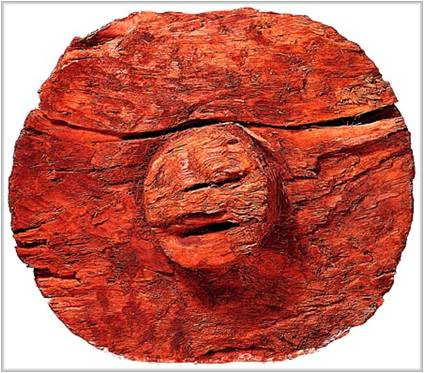
One of the reasons why the wheel was invented only at this point in history is due to the fact that metal tools were needed to chisel fine-fitted holes and axles. This leads to the next reason – the wheel was not just a cylinder rolling on its edge. It was a cylinder that was connected to a stable, stationary platform. This wheel-axle concept was a stroke of genius, but making it was a challenge. The ends of the axle, as well as the holes in the centre of the wheels had to be nearly perfectly smooth and round. Failing to achieve this would result in too much friction between these components, and the wheel would not turn. Although the axle had to fit snugly in the holes of the wheels, they had to have enough room to allow them to rotate freely. Given the complexity of the wheel-axle combination, it may be unsurprising that the wheel was not initially invented for transportation purposes. Instead, it has been claimed that wheels were first used by potters. Remember the 5,500-year-old wheel for Mesopotamia? It seems that it was a potters’ wheel (the use of wheels for pottery making may date even further back into the Neolithic). It seems that the use of wheels for transportation only happened 300 years later. 

Although the wheel has revolutionised the way early human beings travelled and transported goods from one place to another, the wheel was not a perfect invention. For instance, camels were a much more efficient form of transportation in the desert environment when compared to the wheel. It has also been claimed that between the 2 nd and 6 th centuries A.D., the camel supplanted the wheel as the primary mode of transport in the Middle East and North Africa. Nevertheless, the wheel was still used for domestic purposes, such as for irrigation, milling, and pottery making. This shows the various uses of the wheel, and its importance to mankind. I guess we ought to change our perspective about the wheel, and not view it as a basic invention by ‘primitive man’. Instead, we should view it as one of the great achievements of human society.

References
Bellis, M., 2014. The Invention of the Wheel. [Online]
Available at: http://inventors.about.com/od/wstartinventions/a/wheel.htm
Gambino, M., 2009. A Salute to the Wheel. [Online]
Available at: http://www.smithsonianmag.com/science-nature/a-salute-to-the-wheel-31805121/?no-ist